Table Of Content
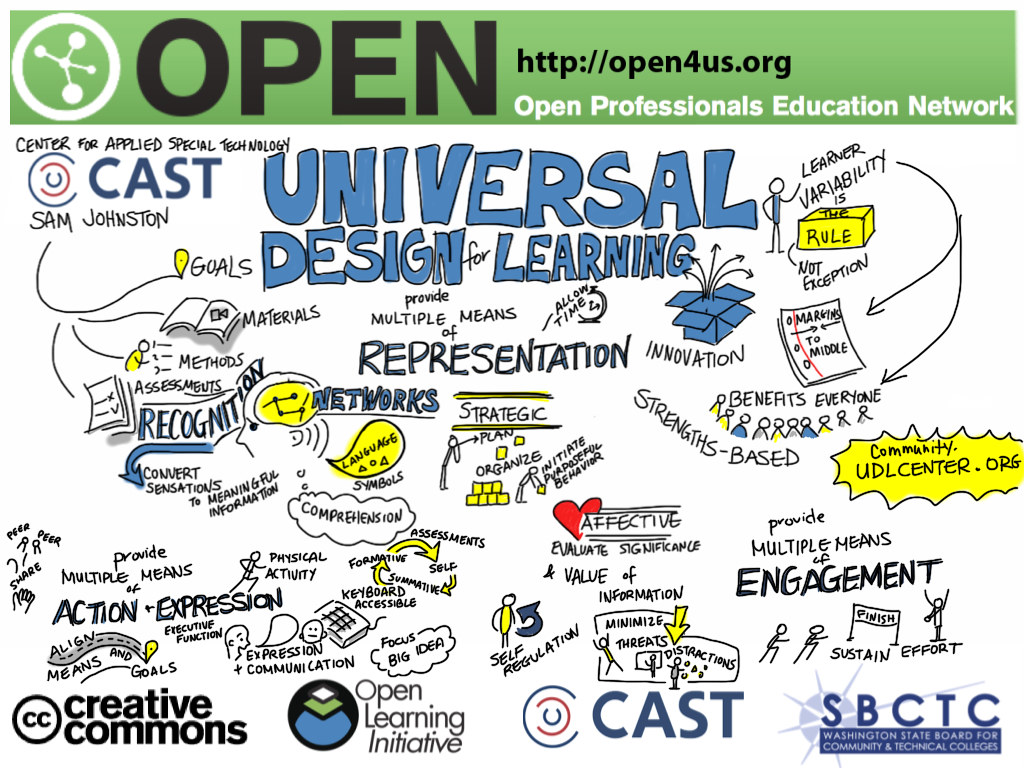
At the core of the UDL framework is providing students with the individualized support they need to succeed. UDL gives you a framework to follow so you can reduce the barriers to learning. The main way to do this is to prepare a learning environment where students have what they need to flexibly meet learning goals. This approach to teaching doesn’t specifically target kids with learning and attention issues. But it can be especially helpful for the 1 in 5 kids with these issues — including those who have not been formally diagnosed.
Accomplish your course creation and student success goals faster with Thinkific.
It’s all about believing—in students and their potential; in the importance of the process as much as the result; and in the power of continual growth, reflection, and lifelong learning. What does a course look like that has considered Universal Design for Learning in the design phase? It will incorporate these three main principles of UDL, developed by CAST, a non-profit educational research and development organization. The mission of the organization is to transform education design and practice until learning has no limits. Assure families that you have high expectations for all students to become expert learners in your classroom. And explain that you’ll keep working with the students and their families to build the skills and interest to make that happen.
The Higher Education Opportunity Act (HEOA) of 2008
It’s about building in flexibility that can be adjusted for every person’s strengths and needs. When teaching, I aimed to address many barriers before we began a unit. Sometimes students didn’t have background knowledge, so we’d cover relevant topics and skills at the start.

Create a Climate of Inclusion
This example demonstrates that what is essential for some can be useful for all. Introduced by educational researchers in the early 2000s, the Universal Design for Learning provides a framework for offering individualized support and inclusion to students. According to this educational framework, doing so is the best way to recognize a student’s strengths and challenges, and to limit any learning barriers at your school.
Many of these practices are already used by teachers in NSW public schools. Equitable course development recognizes that students have a diverse range of abilities, environments, and experiences and incorporates multiple means of learning and expression for these students. By prioritizing accessibility in a course, instructors design their course from the vantage point of multiple perspectives, creating learning experiences that can engage a diverse group of students. Developed by the CAST organization, Universal Design for Learning (UDL) is a framework to improve and optimize teaching and learning for all people based on scientific insights into how humans learn.
For Current Students
Universal Design for Learning Archives - eSchool News
Universal Design for Learning Archives.
Posted: Tue, 06 Dec 2022 01:10:42 GMT [source]
UDL helps build in more ways a diverse group of learners can access information and show what they know. Even if you’re not familiar with the term universal design, you’ve likely encountered it in your everyday life. Common examples include automatic doors and dictation tools on smartphones.
HBCU's Augment HyFlex Format Using Universal Design for Learning (UDL) - Faculty Focus
HBCU's Augment HyFlex Format Using Universal Design for Learning (UDL).
Posted: Mon, 10 Oct 2022 07:00:00 GMT [source]
UDL Principles for Course Communications
With geographical dispersion in online learning offering your students various ways to gather online together and with you as the instructor. Offer online office hours, an AMA (ask me anything) session, and perhaps encourage students to form their own study groups, as these are highly motivating. Create an introductory activity as soon as a user signs up for your course.
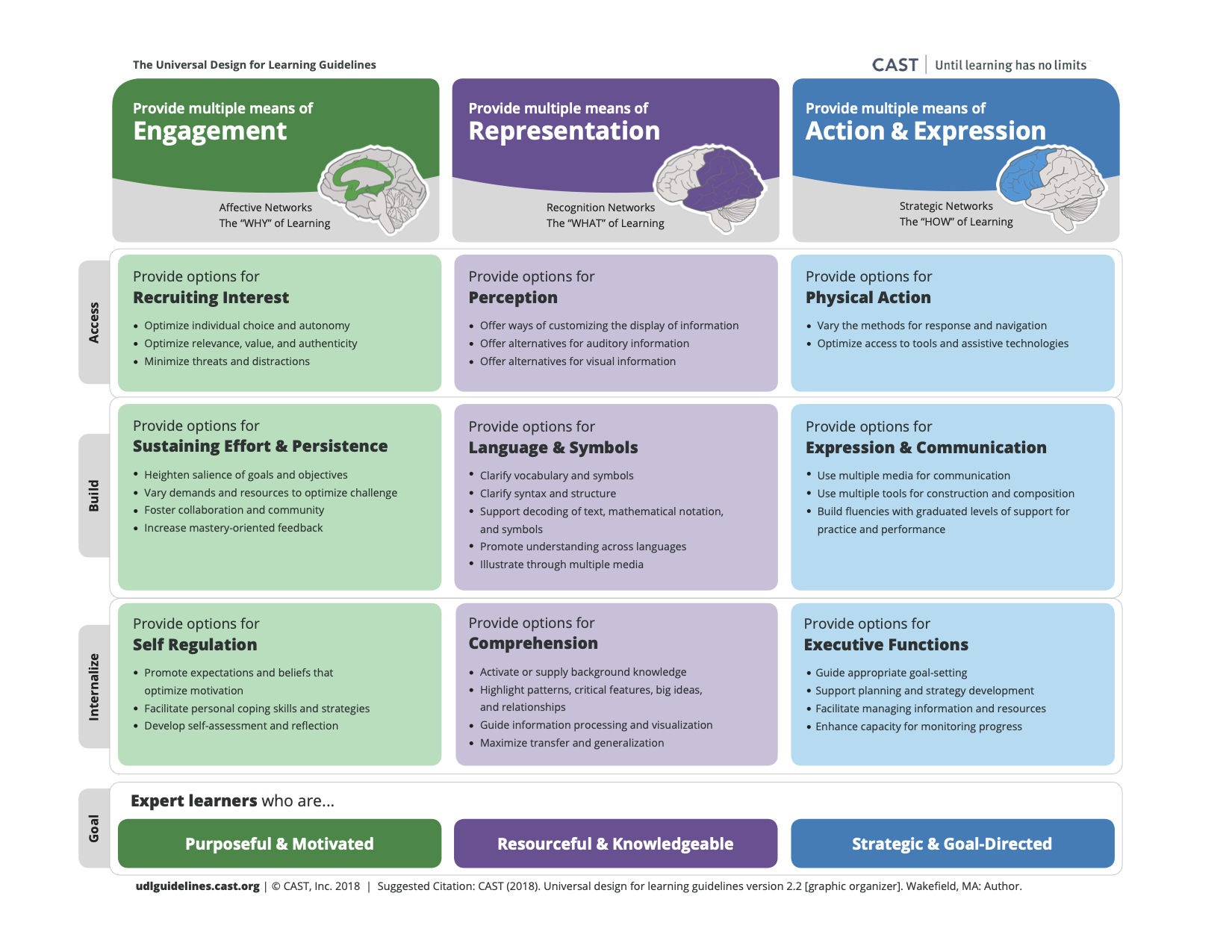
The principles of engagement, representation and expression help identify and remove limitations allowing all students to thrive and reach their full potential (Barteaux 2014). In the same way, Universal Design for Learning can help all learners reach their full potential. Learners receive and process information in different ways, work at different rates, have varied family and cultural backgrounds and bring different knowledge and experience to their learning.
The goal of UDL is to use a variety of teaching methods to remove any barriers to learning and give all students equal opportunities to succeed. It’s about building in flexibility that can be adjusted for every student’s strengths and needs. In order to correctly apply universal design for learning in the classroom, it’s important for teachers to be aware of the strengths and weaknesses of each student. Curriculum planning for every student in every classroom professional learning supports K-12 teachers effectively plan to optimise learning for the full range of students.
Even if you’re not familiar with the term universal design, you’ve likely encountered many examples of it in your everyday life. Closed captions, automatic doors and accessibility features on smartphones are all examples of universal design. Put universal design for learning into practice in your school this year, and your students will grow beyond your expectations. In this guide, you’re going to learn that universal design for learning is focused on flexibility and adaptability to different types of students. Read on to discover what the Universal Design for Learning is all about and how it can reduce educational barriers for students. Then, discover a few practical ways that you can use Universal Design for Learning guidelines in your classroom—along with some examples to get you started.
This includes things like closed-captions, text-to-speech features on your smartphone, or other things that we normally label ‘accessibility features’. Provide multiple means of representation to give learners options to acquire information and knowledge from curriculum content. Now that you know a little more about what the UDL framework is and how this strategy can give your students more personalized support, let’s discuss how to get started. You can use the following strategies to incorporate Universal Design for Learning tools into your classroom. At its core, UDL is a mindset, or set of beliefs, that guides educators in everything they do.
This is when their excitement and willingness to learn is at its peak. Ask students to reflect on their own learning goals for the course and what success looks like for them. In any class, you know there’s a wide range of enthusiasm, background, and skills among your students. When you plan with this range in mind, you can approach the lesson in several ways. Alternatives should also be available for students when it comes to the range of motor action required to interact with the materials used in the classroom.
For example, a history teacher may want students to show an understanding of the events that led to World War 2. He could give his students the option to complete a written test, to create a video ‘reporting’ on the events, or to draw a comic strip that shows which main events led to the start of the war. Adaptability in this area also applies to deaf and hearing-impaired students.
The Every Student Succeeds Act (ESSA) encourages states and districts to use federal funding to help teachers expand the use of UDL. To understand what Universal Design for Learning (UDL) is, it helps to understand what it’s not. Learners need to have a clear picture in their mind of the progress that they are making in class. With regular, personal feedback for students, they’re able to see where they are, what progress they’ve made, and what they still need to accomplish. For example, with digital content on the computer, students can be allowed to control with voice, joystick, or an adaptive keyboard when necessary. In all aspects of life, students must learn to separate critical information from information that isn’t as important.
Tuition assistance applications should be submitted at least one month prior to the final application deadline. Waterford.org is a 501(c)(3)organization, and gifts aretax deductible as allowed by law. The reflection and redesign phase allows you to consider your next instructional moves. With so many options for where creators can build, post, and monetize content, we’ve decided to organize the top Coursera alternatives into one place. Offer a glossary of terms as experts often get caught using jargon and acronyms that might be hard to follow for beginners.
For example, closed captioning on TVs allows people with hearing impairments to see onscreen text of what is being said. If you’ve ever tried to watch the news or a game in a noisy restaurant, you probably used the closed captions to follow along. Being adaptable means allowing for adaptive software and hardware for students that have limitations. Alice Springs (Mparntwe) education declaration, accessed 26 April 2023. There are three principles in the Universal Design for Learning framework (CAST 2023).


No comments:
Post a Comment